

Moreover, aside from the regular financial information, it also includes non-financial information. This could include cash on hand, delivery deadlines, updates on accounts payables and receivables, and product inventory status to name a few. Careful and detailed scrutiny is essential to answer significant questions on unexpected variations, during external final audits. Here, we see what could be the possible inclusions while creating management accounts for your company.
- Remember, you’ll need at least an undergraduate degree and may need to start as a CPA or staff accountant.
- Management accounts can be viewed as a granular breakdown of financial data which informs managers and owners of financial performance, potential risks, and new trends.
- For example, transfer pricing is a concept used in manufacturing but is also applied in banking.
- The BLS reported the median annual salary for accountants and auditors in 2021 at $77,250 or $37.14 per hour.
- The final interpretations presented to internal administrators offer clues to making accurate decisions that affect the future operations of a business.
Budgeting, trend analysis, and forecasting
You will always find a debit record accompanying a credit record in the double-entry accounting system to give a net zero balance. When you source business capital from other sources, it becomes a debt because you either have a credit line or loan from a financial management accounting institution like banks and must return the principle with an interest at a mutually decided time. Hence, an accountant calculates the actual value of an asset by deducting any depreciation (loss of value) from its original purchase price or value.
What Is an Example of Managerial Accounting?
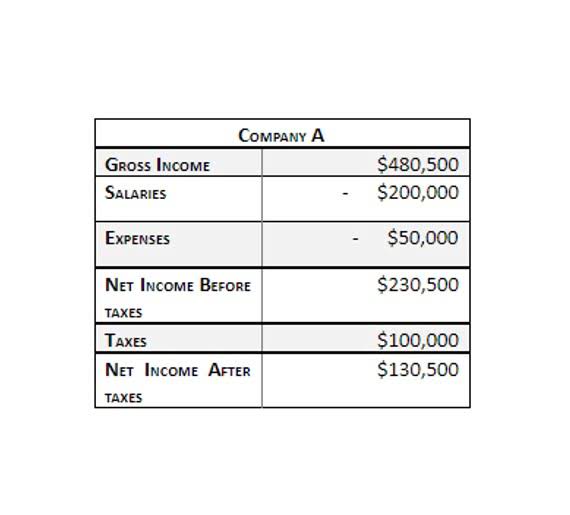
It covers topics in managerial accounting, cost volume analysis, cost allocation, and more. If you want to pursue certification to become a certified management accountant, you have to be a member of the IMA. The IMA membership allows you to access its resources and apply for certification. To stay certified, you’ll have to pay an annual membership fee and complete ongoing continuing education requirements. In this example, the only tasks that would be assigned to the management accountant are budgeting and taxes. The benefits for your company will depend on its size and industry and individual managers’ practices and preferences.
What To Do If You’re Struggling To Pay Your Self Assessment Tax Bill
This includes financial records and accounts about the total cost of goods and services purchased by a company. Overall, the goal of managerial accounting is to compare financial records with a company’s budget and provide beneficial information for better internal decision-making and productivity. https://www.bookstime.com/articles/truckers-bookkeeping-services The three main types of accounting for businesses are tax accounting, financial accounting and management accounting. Many new businesses perform only tax accounting so they can file their tax returns. As the company grows, however, financial and management accounting become increasingly important.
Financial and Funding Business Contingency Planning with Kevin Harfield – MD JamesField Executive Limited

Learn about managerial accounting the different types, careers, and how to enter this field. Before we compare the two types of accounting, here are the important features of financial accounting. The accountants can then use this obtained information to fill the gaps and improve overall efficiency related to production and sales procedures.
Categorise transactions – Organise income and expenses into standard reporting categories for easy analysis and comparisons. Distribution – All departments within an organisation should be informed of recent financial reports. Categorisation – Management account data should be categorised appropriately for reporting purposes. You need to be persuasive and convincing and be educated in both human capital management and financial capital management, according to Lon Searle, former CFO of YESCO Franchising LLC.

My Accounting Course is a world-class educational resource developed by experts to simplify accounting, finance, & investment analysis topics, so students and professionals can learn and propel their careers. Shaun Conrad is a Certified Public Accountant and CPA exam expert with a passion for teaching. After almost a decade of experience in public accounting, he created MyAccountingCourse.com to help people learn accounting & finance, pass the CPA exam, and start their career. With these facts, we wrap up this piece and hope to clear any lurking doubts related to management accounting. Managerial accounting also checks the information from the previous periods for a precise future prediction. Information such as historical pricing, geographical locations, sales statuses, and customer inclination are important for adequate forecasting.
Each classification describes different types of costs incurred by a business in the course of its operations and financial activities, and each of these categories has a unique nature affecting different accounts. Categorize these costs into relevant expense accounts, such as utilities, rent, and salaries. Record each expense in the accounting software or ledgers; at the same time, follow up on each with complete accuracy and clarity in its report.

They use their accounting, finance, and economics skills to provide insights into capital, margin and constraint analysis, inventory levels, and costs. In addition, management accountants may also be involved in planning and budgeting, risk management, decision analysis, and performance measurement. Managerial accounting is the process of analyzing, interpreting, and measuring an organization’s financial processes. This type of accounting uses data to help provide leaders with insight for strategic financial planning that aligns with that organization’s goals and business objectives. In managerial accounting, the main focus will be on financial decisions that affect the internal workings of a company. For example, managerial accountants may help leaders decide whether or not to raise the cost of goods and services.
